Table of Contents
- The Real Journey of Baked Goods Starts After Baking
- What Makes Bakery Packaging Truly “Food-Safe”?
- Freshness Is a Packaging Problem, Not a Baking Problem
- Matching Packaging to Bakery Products (Not the Other Way Around)
- Packaging for Oily and Moisture-Rich Bakery Foods
- When Bakery Packaging Meets Delivery Reality
- Window Boxes: Selling Bakery Products Before They’re Opened
- Sustainability Without Compromising Food Safety
- Branding That Feels Natural, Not Forced
- Custom vs. Stock Bakery Packaging: What Actually Makes Sense?
- Choosing the Right Packaging Supplier
- Final Thoughts: Packaging Is Part of the Recipe
The Real Journey of Baked Goods Starts After Baking
Most people think the magic of bakery products happens in the oven. In reality, the moment a cake is removed from the pan or a pastry cools on the rack, another critical journey begins—the journey from bakery to customer.
This is where food-safe bakery packaging boxes quietly do the heavy lifting.
They protect delicate textures, prevent contamination, preserve aroma, control moisture, support delivery logistics, and shape how customers perceive your brand. Whether you run a neighborhood bakery, an online dessert business, or a restaurant offering takeaway pastries, choosing the right packaging can determine whether your products arrive fresh, intact, and irresistible—or damaged and disappointing.
This article explores bakery packaging from a real-world perspective: how food-safe bakery packaging boxes perform across different products, sales channels, and business goals—and how to choose the right solution without overcomplicating the process.

What Makes Bakery Packaging Truly “Food-Safe”?
Before talking about design or branding, food safety must come first.
Food-safe bakery packaging boxes are made from materials that are specifically approved for food contact. This means the packaging will not transfer harmful substances, odors, or residues to baked goods—even when exposed to heat, oils, or moisture.
Key food-safety characteristics include:
-
Compliance with food-contact regulations
-
Non-toxic paperboard and coatings
-
Food-safe inks and adhesives
-
Resistance to grease and moisture
-
Odor-neutral materials
For bakery items like cakes, pastries, cookies, and breads, packaging safety is not optional—it’s a baseline requirement that protects both consumers and brands.
Freshness Is a Packaging Problem, Not a Baking Problem
Many bakeries focus on recipes and ingredients to keep products fresh, but packaging often determines how long that freshness lasts.
Air, Moisture, and Texture
Bakery items respond differently to air exposure:
-
Cakes dry out when exposed too long
-
Pastries lose crispness if moisture is trapped
-
Cream-filled desserts require hygienic protection
Well-designed food-safe bakery packaging boxes help regulate airflow and moisture without sealing products too tightly or leaving them exposed.
Structural Stability Matters
A soft sponge cake or decorated pastry can lose its visual appeal instantly if packaging collapses or shifts during transport. Strong paperboard, reinforced corners, and proper sizing are just as important as food-safe materials.
Matching Packaging to Bakery Products (Not the Other Way Around)
One of the most common mistakes bakeries make is using the same box for every product. Different baked goods require different packaging logic.
Cakes and Layered Desserts
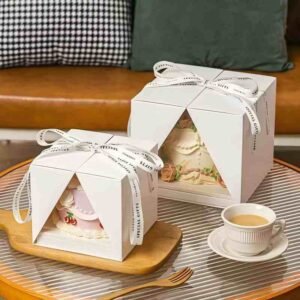
Cakes need height clearance, base support, and side protection. Food-safe bakery packaging boxes for cakes often include:
-
Rigid or thick paperboard
-
Flat, reinforced bases
-
Optional cake boards or pads
These features prevent sliding, tilting, and decoration damage.
Pastries and Croissants
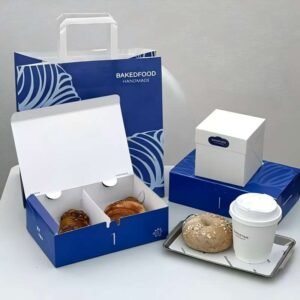
Flaky pastries contain butter and oils, which means grease resistance is essential. Food-safe coatings prevent oil from weakening the box while keeping hands and delivery bags clean.
Cookies and Baked Snacks
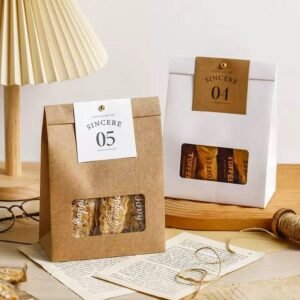
For cookies, structure and portion control matter. Boxes should prevent breakage while maintaining a clean, attractive presentation for retail or gifting.
Packaging for Oily and Moisture-Rich Bakery Foods
Bakery packaging faces unique challenges because many products are rich in fats, sugars, and moisture.
Why Oil Resistance Is Critical
Oil migration can:
-
Stain boxes
-
Weaken packaging structure
-
Create hygiene concerns
-
Damage brand perception
Food-safe bakery packaging boxes often use specially treated paperboard or eco-friendly barrier coatings to block grease without relying on plastic-heavy solutions.
Moisture Control Without Plastic Overload
Modern bakery packaging balances moisture resistance with sustainability by using water-based coatings or compostable barrier layers—keeping products fresh while meeting eco expectations.
When Bakery Packaging Meets Delivery Reality
Food delivery has changed how bakery packaging performs.
A box that works perfectly on a retail shelf may fail completely during delivery.
Delivery-Friendly Design Considerations
For delivery, food-safe bakery packaging boxes should be:
-
Stackable and crush-resistant
-
Securely closed without excessive tape
-
Easy to carry and handle
-
Tamper-evident when necessary
Auto-lock bottoms, tuck-in flaps, and reinforced walls improve performance during transport without increasing packaging complexity.
Presentation Still Matters After Transit
Customers expect desserts to look as good at home as they did online. Internal supports, non-slip bases, and smart sizing help maintain presentation quality—even after a long delivery route.
Window Boxes: Selling Bakery Products Before They’re Opened
Window packaging plays a powerful role in bakery sales.
Seeing the product builds trust, triggers impulse purchases, and reduces hesitation—especially for new customers.
Why Window Boxes Work So Well
-
They showcase freshness and craftsmanship
-
They reduce the need to open packaging
-
They increase shelf and display appeal
Food-safe bakery packaging boxes with windows typically use clear, food-approved films that won’t fog or weaken the box structure.
Window boxes are especially effective for cupcakes, pastries, cookies, and desserts meant to be visually tempting.
Sustainability Without Compromising Food Safety
Eco-conscious consumers are paying attention not just to ingredients, but also to packaging choices.
Sustainable Materials in Bakery Packaging
Many food-safe bakery packaging boxes are now made from:
-
FSC-certified paperboard
-
Recycled fiber (with food-safe barriers)
-
Kraft paper with natural appeal
Sustainability works best when packaging is right-sized—using no more material than necessary.
Communicating Eco Choices Clearly
Simple printed messages or symbols help customers understand your sustainability efforts without overwhelming the design.
Branding That Feels Natural, Not Forced
Bakery packaging doesn’t need loud graphics to stand out. Often, simplicity feels more premium.
Subtle Branding That Builds Trust
-
Clean typography
-
Soft color palettes
-
Minimalist logos
-
Inside-print brand messages
Food-safe bakery packaging boxes become brand ambassadors when design and function feel intentional.
Unboxing as a Brand Experience
Even everyday bakery purchases benefit from thoughtful packaging. A smooth opening experience, clean interior, and secure structure all contribute to perceived quality.
Custom vs. Stock Bakery Packaging: What Actually Makes Sense?
Not every bakery needs fully custom packaging from day one—but understanding the difference helps with scaling.
Stock Boxes
-
Lower cost
-
Faster availability
-
Limited branding and sizing
Custom Food-Safe Bakery Packaging Boxes
-
Precise sizing for products
-
Better protection and presentation
-
Stronger brand identity
-
Less material waste over time
Many bakeries start with semi-custom solutions and move toward full customization as volume grows.

Choosing the Right Packaging Supplier
Your packaging supplier is as important as the packaging itself.
Look for suppliers who understand:
-
Food-contact compliance
-
Bakery-specific packaging challenges
-
Grease and moisture resistance
-
Custom sizing and structures
-
Consistent quality control
Always request samples to test strength, oil resistance, and real-world performance.
Final Thoughts: Packaging Is Part of the Recipe
Bakery success doesn’t stop at baking. In today’s market, food-safe bakery packaging boxes are part of the product experience itself.
They protect freshness, ensure safety, support delivery, communicate brand values, and influence buying decisions. When packaging is thoughtfully chosen, customers notice—even if they don’t consciously realize why your product feels better.
The right packaging doesn’t compete with your baked goods.
It quietly makes them shine.