Table of Contents
How Smart Packaging Drives Brand Growth, Customer Experience, and Sustainability
1. Introduction
In both e-commerce and traditional retail, packaging is often the very first physical impression a customer has of a brand. Long before a customer touches the product itself, they are already forming expectations based on the box it comes in—its texture, structural design, color, finish, sound, and the anticipation it creates during unboxing.
In 2025, custom packaging boxes are no longer simple protective containers. They have evolved into strategic branding assets that influence purchasing decisions, marketing performance, customer loyalty, and even social media exposure. With global competition intensifying and consumer expectations rising, brands now view packaging as a crucial touchpoint that enhances perceived quality, storytelling, and brand identity.
This comprehensive guide explores the role of custom packaging boxes, how they work, the types available, their benefits, customization methods, manufacturing processes, and how businesses can choose the right supplier. Whether you’re a start-up, a growing e-commerce brand, or an established international retailer, understanding custom packaging is essential for building a strong, memorable brand.

2. What Are Custom Packaging Boxes?
Custom packaging boxes are specifically designed, sized, printed, and engineered for a particular brand or product. Unlike standard “stock boxes,” custom boxes are tailored to enhance product presentation, increase protection, and align with the brand’s unique style.
A custom box may include:
-
Exact internal dimensions tailored to the product
-
Branded colors, typography, graphics, and logos
-
Specialty finishes such as foil stamping, embossing, debossing, and spot UV
-
Custom inserts or trays made from paperboard, foam, or molded pulp
-
Unique opening mechanisms that enhance the unboxing moment
-
Sustainable materials chosen by eco-focused brands
This means two companies selling the same product category—such as cosmetic serums—can have completely different packaging experiences because every structural and visual element is custom-built.
2.1 Why Custom Packaging Is Different from Stock Packaging
Stock packaging:
-
Generic sizes
-
Limited printing
-
Basic structure
-
Designed for universal use
Custom packaging:
-
Exact fit for the product
-
Tailored branding identity
-
Enhanced structural engineering
-
Premium finishes and aesthetics
-
Better protection and customer experience
Custom boxes allow brands to communicate their story, differentiate from competitors, and deliver a cohesive customer experience that begins the moment the package is received.
3. Why Custom Packaging Boxes Matter
3.1 Better Brand Recognition
A memorable box is often the first step toward long-term brand recall. Customers instantly recognize brands like Apple, Glossier, or Chanel before even seeing the product—thanks to distinctive colors, textures, and finishes.
Custom packaging helps your brand achieve the same impact:
-
Unique visual identity
-
Strong shelf presence
-
Reinforced brand values
-
High recognition on social media
Well-designed packaging acts as a silent salesperson, delivering brand messaging more effectively than generic printing or plain cartons.
3.2 Improved Customer Experience
The unboxing moment has become essential in e-commerce. Platforms like TikTok, Facebook, and YouTube are filled with unboxing videos, and customers actively seek products that create excitement.
Custom packaging enhances the customer experience through:
-
Beautiful opening structures
-
Printed interior designs
-
Personalized messages
-
Premium finishes
-
Better tactile sensation
A memorable unboxing experience can:
-
Increase customer satisfaction
-
Encourage social media sharing
-
Strengthen emotional connection
-
Improve review quality
-
Reduce product returns due to better protection
In 2025, unboxing is no longer a trend—it is a marketing engine.
3.3 Enhanced Product Protection
Different products have different protection requirements:
| Product Type | Protection Needed | Packaging Solution |
|---|---|---|
| Cosmetics | Prevent leakage, keep upright | Tight-fitting cartons & inserts |
| Electronics | Shock absorption | Corrugated boxes + foam / EPE |
| Food | Safe contact surface | Food-grade materials |
| Fragile glassware | Impact protection | Double-wall board, custom dividers |
| Subscription boxes | Survive shipping | Rigid mailers / corrugated mailers |
Custom packaging ensures structural integrity, reduces transportation damage, and lowers return rates—ultimately saving cost.
3.4 Sustainability Opportunities
With global consumers increasingly prioritizing eco-friendly brands, custom packaging allows companies to adopt sustainable options such as:
-
Recycled Kraft paper
-
FSC-certified paper
-
Compostable coatings
-
Soy-based inks
-
Right-sized boxes to reduce waste
-
Fully recyclable packaging systems
Sustainable packaging isn’t just environmentally responsible—it increases brand trust, especially in the US and European markets where eco-conscious consumption continues to rise.
4. Common Types of Custom Packaging Boxes
4.1 Folding Carton Boxes
Made from lightweight paperboard, they are widely used in:
-
Cosmetics
-
Skincare
-
Pharmaceuticals
-
Food & beverage
-
Retail products
They support high-quality CMYK printing and are cost-effective for large production runs.
4.2 Rigid Boxes (Gift Boxes)
Rigid boxes—also known as premium or luxury boxes—are sturdy and elegant. Common in:
-
Luxury beauty
-
Jewelry
-
Premium watches
-
Smartphones & electronics
-
Gift sets
Rigid boxes allow:
-
Magnetic closures
-
Drawer-style structures
-
Thick walls (2–3 mm board)
-
High-end finishes
They elevate brand perception and are often kept by customers as storage boxes.
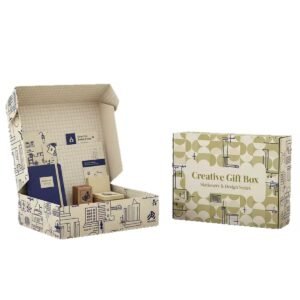
4.3 Corrugated Mailer Boxes
These are the backbone of e-commerce packaging. Ideal for:
-
Clothing shipments
-
Subscription boxes
-
Electronics
-
Small appliances
Corrugated mailers offer:
-
Excellent protection
-
Custom printing options
-
Strong unboxing presentation
-
Cost-efficient shipping
4.4 Display Boxes
Display boxes combine packaging and merchandising. Used for:
-
Retail store shelves
-
Supermarket displays
-
Electronic accessories
-
Beauty testers
A well-designed display box increases visibility and encourages impulse purchases.
4.5 Kraft Packaging
Kraft packaging remains popular among eco-focused brands:
-
Natural brown appearance
-
Fully recyclable
-
High strength
-
Perfect for organic brands, handmade goods, coffee, and baked goods
It communicates authenticity and environmental responsibility.
5. Customization Options
5.1 Printing Methods
Different printing technologies serve different needs:
-
CMYK offset printing: best for colorful designs
-
Pantone printing: ensures exact color accuracy
-
Digital printing: ideal for small batches or variable designs
-
Flexographic printing: used for corrugated boxes
5.2 Surface Finishes
Packaging finishes enhance tactile and visual appeal:
-
Matte lamination
-
Gloss lamination
-
Soft-touch finish
-
Spot UV
-
Hot foil stamping
-
Embossing & debossing
-
Glitter, holographic film, or texture coatings
These finishes create premium unboxing moments and elevate brand value.
5.3 Structural Customization
Structural engineering shapes how the box opens, displays, and protects the product.
Popular styles include:
-
Magnetic closure box
-
Drawer-style box
-
Book-style box
-
Auto-lock bottom
-
Reverse tuck
-
Window cut-out
-
Custom molded inserts (paperboard, pulp, EPE, foam)
Each structure enhances both functionality and aesthetics.
6. How Custom Packaging Boxes Are Made
Step 1: Measurement & Structural Engineering
Based on:
-
Product dimensions
-
Shipping needs
-
Weight
-
Fragility
-
Material type
Engineers create dielines and determine fluting, thickness, and folds.
Step 2: Artwork & Design
Designers finalize:
-
Brand colors
-
Logo placement
-
Typography
-
Print layout
-
Finishing options
This step defines the visual identity of the packaging.
Step 3: Printing
Depending on quality needs and quantity:
-
Offset printing for high-resolution images
-
Digital printing for sampling or small runs
-
Flexo printing for large corrugated orders
Step 4: Finishing
Coating, laminating, foiling, and other aesthetic treatments are applied.
Step 5: Die-Cutting & Gluing
The printed sheets are cut with a die-cutter and assembled:
-
Folding carton boxes: glued flat
-
Rigid boxes: assembled with wrapping paper
-
Mailer boxes: shipped flat for cost savings
Step 6: Quality Inspection
Every batch is inspected for:
-
Color accuracy
-
Structural precision
-
Glue strength
-
Cutting accuracy
-
Surface finish quality
-
Material thickness
Step 7: Packaging & Delivery
Boxes are:
-
Flat-packed for shipping efficiency
-
Or pre-assembled for luxury boxes
7. How to Choose a Good Packaging Supplier
Finding the right supplier is critical. Consider:
7.1 Production Capabilities
-
Advanced printing equipment
-
Various paper stocks
-
Large and small MOQ capabilities
7.2 Color Accuracy
Check whether the factory uses:
-
Pantone system
-
Color-matching equipment
-
Strict color calibration
7.3 Material Quality
A reliable supplier provides:
-
FSC-certified materials
-
High-quality virgin paper
-
Recycled options
7.4 Communication & Response Time
Professional manufacturers offer:
-
Fast sampling
-
Clear communication
-
Structural suggestions
-
Reliable delivery times
7.5 Experience with Global Brands
Suppliers serving European and American markets understand:
-
Packaging compliance
-
Shipping standards
-
Cultural preferences
A good supplier is a long-term packaging partner—not just a manufacturer.
8. Conclusion
Custom packaging boxes are a powerful branding tool that extends far beyond simple product protection. They influence perceptions, improve customer satisfaction, drive repeat purchases, and help brands stand out in highly competitive markets.
Whether you’re building a luxury beauty brand, launching an e-commerce subscription service, or creating eco-friendly food packaging, custom boxes allow you to showcase your identity, protect your products, and create lasting customer impressions.
Investing in custom packaging is investing in long-term brand value, customer loyalty, and overall business growth.